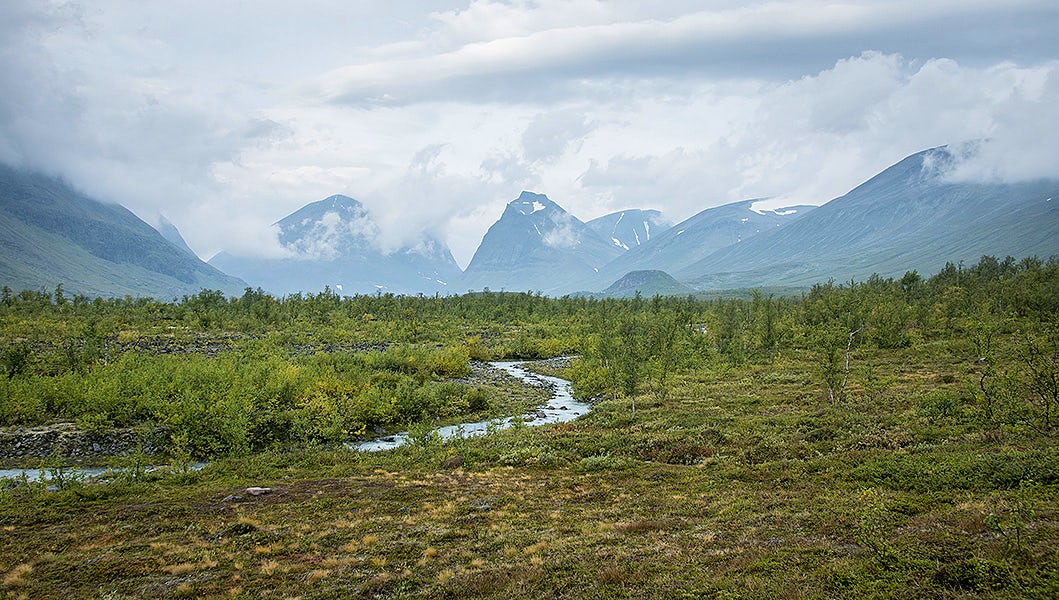
Guided tours to Kebnekaise’s southern peak via the western route
Booking for the summer’s guided summit tours is now open. At the moment, you book a tour that follows the western route, but our hope is to move the guided tours to the eastern route later in the summer, if conditions allow.
Booking for the summer’s guided summit tours is now open. At the moment, you book a tour that follows the western route, but our hope is to move the guided tours to the eastern route later in the summer, if conditions allow.
A first safety assessment of the eastern route will be made in June. If everything looks good, tours can be moved from 10 July onwards. If snow and weather conditions require more time, we will wait a few more days before making a decision.
Why is the eastern route uncertain?
In recent years, we have seen the mountain environment around Kebnekaise – especially along the eastern route – change more rapidly than before. We have observed:
- more rockfalls
- larger crevasses
- more unpredictable snow and ice conditions that vary significantly from year to year
The glacier is melting faster and shifting differently each year. This increased unpredictability is confirmed by researchers at Tarfala research station, with whom STF collaborates. The climate changes we see today mean that extreme years are expected to become both more common and more severe.
In summer 2025, STF decided to guide tours exclusively via the western route due to safety concerns. At the same time, an evaluation of the eastern route was carried out to ensure the safety of both guests and staff. The preliminary assessment shows that the eastern route may become possible to use again, but only after we have seen how the winter and spring have affected the conditions.
Western route
The western route is the most common way to reach the summit of Kebnekaise. It spans 18 kilometres round trip and usually takes between 10 and 15 hours. It is a physically demanding hike with a total elevation gain of about 1,800 metres. Along the way, you descend 300 vertical metres before making the final ascent to the summit.
The terrain is alpine and features varied surfaces – snow, ice, rocky and uneven ground, and steep sections – which often makes the hike feel longer and tougher than the distance suggests. However, the western route is not quite as technically demanding as the eastern route. During the hike, you pass streams, mountain heath, rocky ground, and steep slopes before reaching the top.
Eastern route
The eastern route is technically challenging, even for experienced hikers and climbers. If you do not have the necessary skills, the tour should be done with a guide. The route takes between 8 and 12 hours, is about 15 kilometres round trip, and has an elevation gain of 1,500 metres as you ascend directly toward the summit.
Unlike the western route, the eastern route crosses glaciers and snowfields, which requires proper equipment and knowledge of glacier travel. In addition, there is a climbing section secured with a via ferrata, which also requires specific equipment.
Read more about climbing Kebnekaise and book your guided tour here.