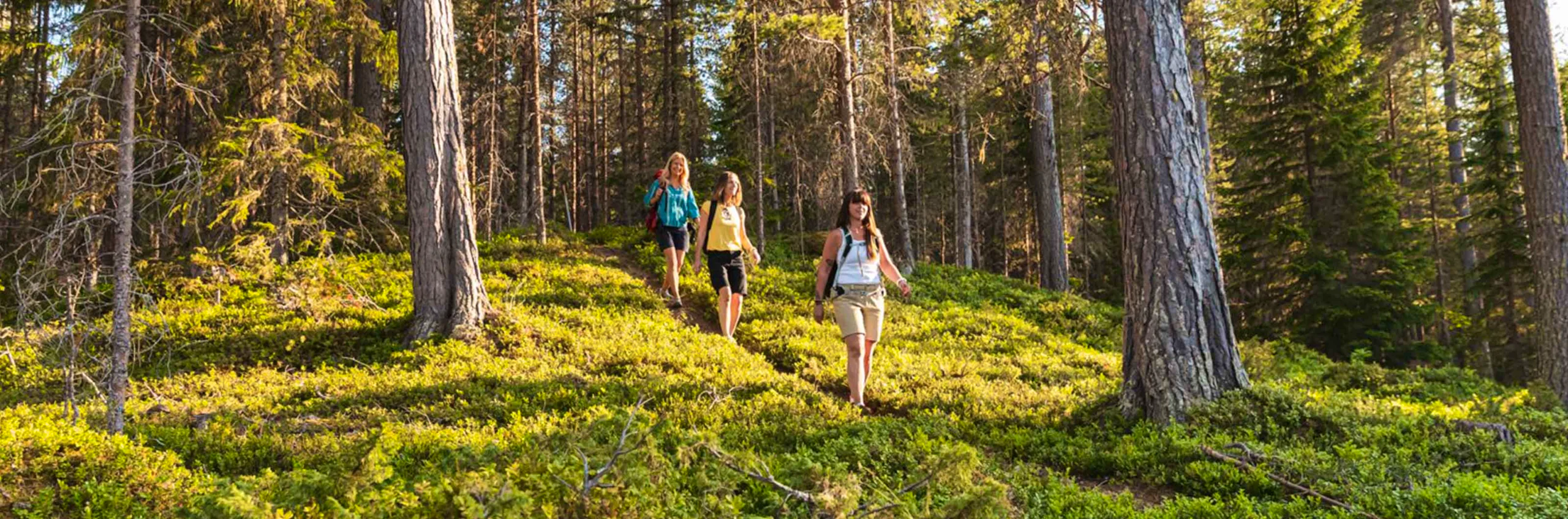
Packing list hiking – lowland
Packing for a hike is about bringing the essentials without carrying too much. Here’s a packing list for hiking in lowland terrain.
In lowland areas, conditions are often easier than in the mountains—less elevation, closer to roads, settlements, and services, and more opportunities to refill water. At the same time, planning is still important. Equipment such as a map and compass should always be in your backpack, and on longer hikes you need to know where to find water and whether it needs to be treated. Unlike in the mountains, you can rarely drink directly from natural water sources. Adapt your packing to the specific hike and avoid carrying more than necessary.
Packing list for lowland hiking
Equipment
Safety
Clothing
Food and drink
If you are bringing a tent
If you plan to camp, you will also need:
Packing tips for hiking
- Choose the right materials. Wool keeps you warm even when damp and works well both during activity and rest. Merino wool breathes well and doesn’t retain odours like synthetic materials can. Synthetics wick moisture effectively and are great when you’re active. Avoid cotton, as it cools you down when wet.
- Pack light. You usually need fewer changes of clothes than you think. A lighter backpack makes the hike both easier and more enjoyable.
- Test-pack at home. Pack your backpack well in advance, weigh it, and try carrying it on a longer walk. You’ll quickly notice if anything needs adjusting.
- Organise your packing. Using lightweight waterproof stuff sacks helps keep your gear organised and provides extra protection to keep your clothes dry.
More pages for you
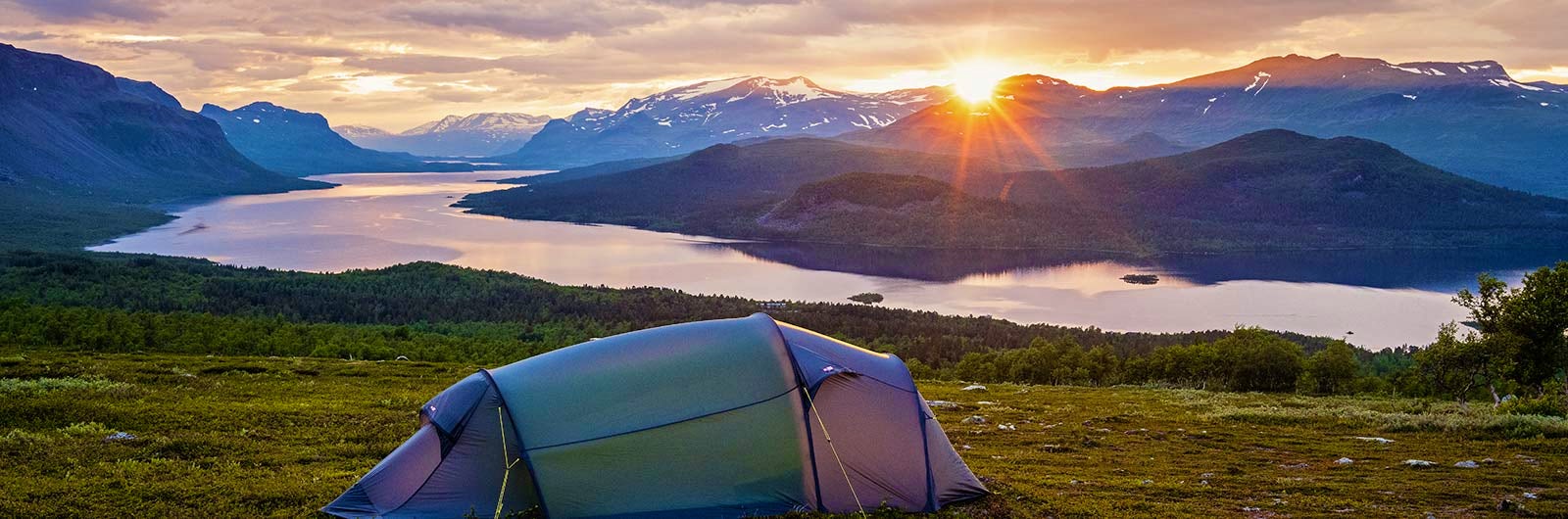
Hiking with a tent
Are you wondering what to consider when hiking with a tent, choosing a campsite, or perhaps buying new equipment? You will find advice and tips on hiking with a ten on this page.
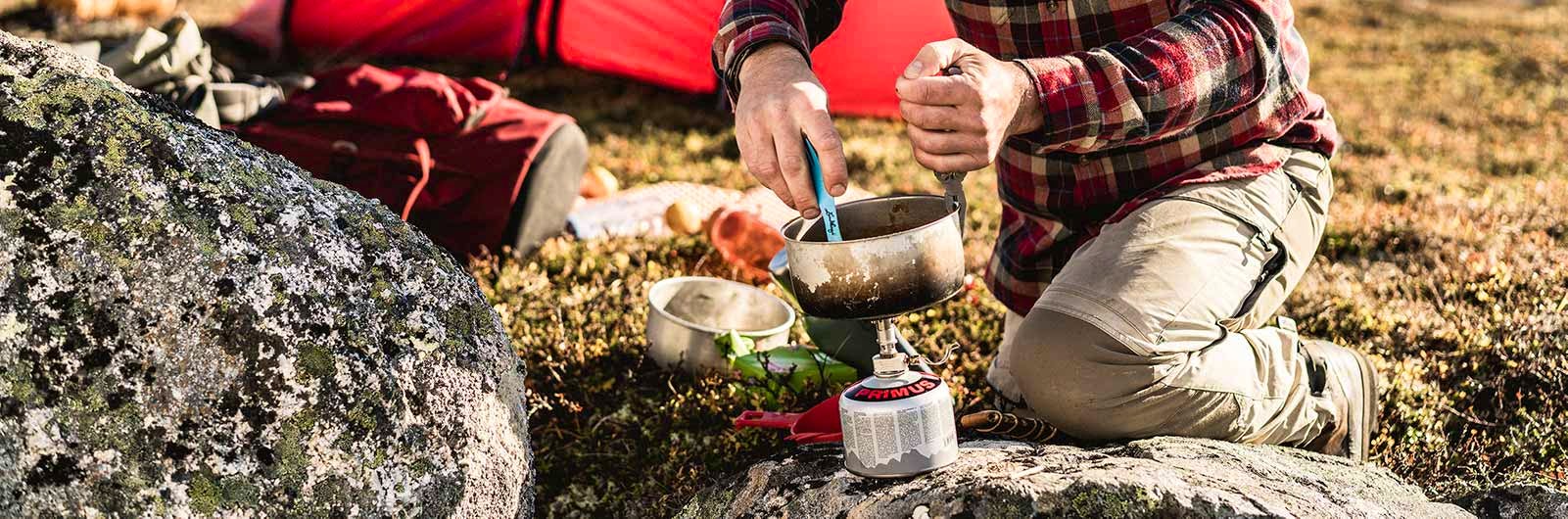
Cooking outdoors
Even simple meals taste wonderfully delicious when enjoyed outdoors. On this page, you’ll find both inspiration and information on how to elevate your hiking experience with food!

Mountain guide
Find important information about mountain safety, waste management, and what it’s like to stay in a mountain cabin.